Make the call you can defend.
3Dogs runs your highest-stakes decision through independent AI models that argue it out — and returns one documented recommendation with the assumptions, the risks, and the dissent preserved.
Enterprise engagements from $20,000/year · Self-serve from $99/month · Free 30-day trial, no card
Every number above links to a published case study with the actual delivered report. See the evidence →
3Dogs Nexus runs a decision process, not a prompt. A business question goes in; Discovery clarifies what is actually being asked and gathers live cited evidence; then 8–32 independent AI model seats — open- and closed-weight, served across Amazon, Microsoft and Google — argue it out in a five-phase adversarial debate. Out comes one recommendation with its assumptions, risks, confidence level and the dissent preserved rather than averaged away.
AI isn't lying to you. You're asking one model to be an oracle.
A single model has no concept of truth to lie about — it's a plausible-completion machine, brilliant and unaccountable in the same breath. The fix isn't a cleverer prompt — it's a better method, and it starts with Discovery: our research moat that reframes the question. It grounds your ask in real, cited evidence and poses the right question before any model answers. Then a pack of independent models cross-examine it — arguing instead of agreeing — and the system reports how sure it actually is, dissent and all.
Reframe the approach, not the wording — and make your human decisions better.
The most expensive decisions get the least rigor.
A bad hire, a wrong expansion, a misread market — these calls shape years. They get made under pressure, on partial information, on a gut call or a single chatbot answer. No analyst bench. No board. No second opinion — least of all for the owners and advisors who decide alone.
- Hire or wait?
- Expand or consolidate?
- Acquire or build?
- Invest or preserve cash?
- Enter a new market?
- Change the model?
- Bad hires
- Failed projects & launches
- Investments that never return
- Years of technical debt
- Expansions that miss the plan
One confident answer is the trap.
A single model gives a fluent, convincing answer — while missing the risk, the alternative, or the assumption that changes everything. The more certain it sounds, the more dangerous it is for a decision you can't reverse.
| Traditional consulting | A single AI | 3Dogs Nexus | |
|---|---|---|---|
| Cost | Expensive | Cheap | Affordable |
| Speed | Slow | Fast | Fast |
| Perspective | Human-constrained | Overconfident, single view | Many, challenged |
| Reasoning trace | Limited | Weak | Documented end-to-end |
| Accountability & scale | Hard to scale | Weak accountability | Human-governed, software-scaled |
"A single model speaks with the confidence of a grade-A salesperson — even when it's wrong."
Independent models. Assigned disagreement. One documented call.
Better decisions don't come from a faster answer — they come from a better process. Discovery grounds your question in live, cited evidence. Then independent models from different makers take opposing seats — including a devil's advocate whose job is to break the argument — and debate until the strongest case survives.
Your decision, in plain English. Any language works.
Discovery asks only what actually matters.
Live, cited evidence — current facts, not model memory.
Independent seats challenge every assumption.
One call, with conditions and confidence.
The human. Always.
Many minds, many logics
Each independent position reasons from a different decision logic — so blind spots don't line up. The wisdom of crowds, made operational.
Challenged, not accepted
The process forces challenge and reconciliation — assumptions stress-tested, risks surfaced — before anything is recommended.
Documented & human-led
The reasoning is recorded; the final decision and accountability stay with the human.
"But don't combined AIs just agree with each other?"
It's the right question to ask. If different models share the same blind spots, stacking them can raise consensus faster than truth — an echo chamber. Breaking that is a design problem, and it's the problem 3Dogs is built around.
Different models, different blind spots
The panel spans open-weight and closed-weight models from many makers — all served through Amazon, Microsoft and Google — trained on different data. Their errors don't line up the way one vendor's family of models would.
We assign the disagreement
Seats are given genuinely opposing roles — a devil's advocate, a "destroyer" whose job is to break the argument — so the panel argues instead of nodding along.
Anchored to evidence, not vibes
Discovery grounds the debate in live, cited research, so the models reason from facts on the record — not from shared training priors.
Preserved dissent; the call gets scored
We print the minority report instead of burying it, and Brier-score our confidence against real outcomes — so confident agreement can't quietly be wrong.
A powerful second opinion — with the rigor to back it, and the humility to hand you the call.
Classical logic, not vibes
The panel reasons with formal structure — deduction, induction, abduction, Bayesian updating, first principles, fallacy-checking — anchored to live, cited evidence. Not a fluent guess; an argued case you can inspect.
It stops and decides
Left alone, AI would ask forever — more data always feels safer. Discovery asks up to 13 hard questions, then a human-drawn line says enough: it commits on what's knowable, not what's complete, and shows the assumptions it committed under.
You still decide
Fifty-plus engines debating your call is enormous leverage — but 3Dogs is a second opinion, not the surgeon. The recommendation is documented and defensible; the decision, and the accountability, stay with you.
Three working dogs. One job: better judgment.
Named for the hunting dogs that started this — each one finds what a single pair of eyes misses.

Nexus
Grounds a consequential question in evidence, has independent models debate it, and returns one documented recommendation with dissent preserved.
Explore Nexus →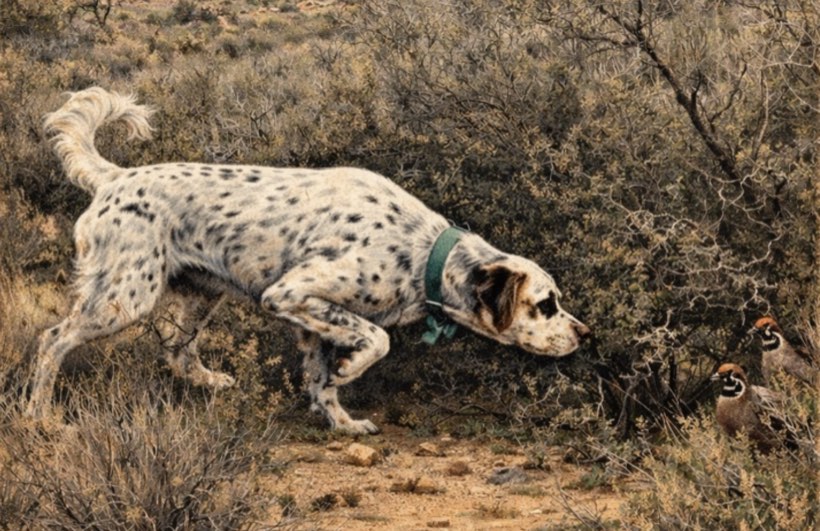
Pointer
Shows what AI can find, understand, and verify about your organization — then points to the highest-value gaps across SEO, AEO, GEO and A2A.
Explore Pointer →
Bloodhound
Searches your market against your buy-box, screens the noise, and delivers a ranked, underwritten shortlist that gets deeper as it goes.
Explore Bloodhound →50+ models — open-weight and closed-weight — served through Amazon, Microsoft & Google.
 AWS
AWS
Models spanning
 Amazon
The models can change. The process is the product.
Your machine. Your rules. Your perimeter.
Enterprise engagements are scoped, human-led, and built around your constraints: a named consultant on every engagement, connectors into your own systems, a model roster you control — exclude any vendor, cloud or jurisdiction — and deployment from managed cloud to on-premises behind your firewall.
Document mountains
Millions of pages, read in full. The Enron test: 45,320 real emails, blind mandate, fraud architecture named — in 2 hours 28 minutes.
Deal intelligence
A live portfolio engagement: 4-model blind valuations, buy-box as inspectable code, and a deep multi-panel underwrite across up to 80 properties in a wave.
Honest security posture
No security certifications held (no SOC 2 / ISO / HIPAA) — architecture instead: your cloud, your keys, or fully inside your perimeter, where your existing controls govern.
The same process. Very different stakes.
Auto shop — EV now, or preserve cash? → a staged, hybrid-first path that protects cash, staff, and future optionality.
Wildfire-season acreage forecast → a probability spread, graded evidence, and escalation triggers a county planner can defend.
Fast-moving outbreak → treatment-first action with capacity gates and automatic escalation triggers.
"Should my auto shop invest in EV capability now?"
→ Proceed in phases — hybrid-first.
Assumptions: EV adoption continues · training costs manageable
Risks: technician shortage · utilization uncertainty
Monitoring: quarterly utilization · local EV registrations
Confidence: MODERATE
- Plain English. Written for a busy owner — no jargon, no consulting-speak.
- Real evidence. Live research with citations — current facts, not model memory.
- Stated assumptions. Every recommendation lists exactly what it rests on.
- Confidence & conditions. How sure we are, what would change it, what to watch.
We gave 3Dogs the same 2008 call Warren Buffett faced. It reached his exact verdict.
Asked whether to rescue Lehman Brothers, 3Dogs said "walk away" — a 10-to-1 reject that named the Repo 105 accounting fraud and the 30-to-1 leverage — the same decision Buffett actually made. Plus a live wildfire head-to-head vs. Gemini and a blind fraud hunt across 45,320 Enron emails.
The Buffett test
Asked whether to rescue Lehman, the panel said walk away — 10-to-1 — citing the leverage and the accounting fraud. The same call Buffett made.
Read the case → ADVERSARIAL REVIEWGemini's verdict
A rival AI designed a trap engagement, withheld data on purpose, then reviewed us in the first person. Published unedited.
Read the review → ENTERPRISE SCALEThe Enron test
Half a million emails, narrowed to 45,320, read blind: "Launch the formal investigation now." LJM, Raptor and Chewco named — in 2.5 hours.
Read the investigation →All 17 case studies, each with the delivered report →
One AI Told You. So What?
A five-minute tour of what actually happens when you hand Rex a decision.
Watch on YouTube →We asked the AIs — blind — to explain and critique us.
No account, no coaching beyond "explain 3dogs.ai." Here's how independent AI models describe us — the criticism included — and then you can try it yourself.
"It isn't a chatbot; it is a structured decision intelligence platform designed to act like a virtual, adversarial board of directors for your brain."
"One AI is a trap. You need an argument."
"Its differentiator is less 'a unique AI model' and more workflow, orchestration, and human accountability — the process is the product."
It even raised the hardest objection on its own — the "AI echo chamber" — the one we answer above.
"The strongest version of the product story is 'we run a disciplined decision process that forces better thinking before money is committed.'"
Even the critical take landed on the real value — and named the bar we have to clear.
Try it yourself: ask any web-connected AI to "explain 3dogs.ai in plain English," then ask it why 3Dogs might fail. You'll get the same story — from a source with no reason to flatter us.
This started with hunting dogs, not a pitch deck.
The best hunting dog Alan ever saw didn't come from Silicon Valley. Three dogs working a desert field — each seeing what the others missed — is still the clearest picture of how independent perspectives beat one confident nose. That's the company. That's the method.
Read our story →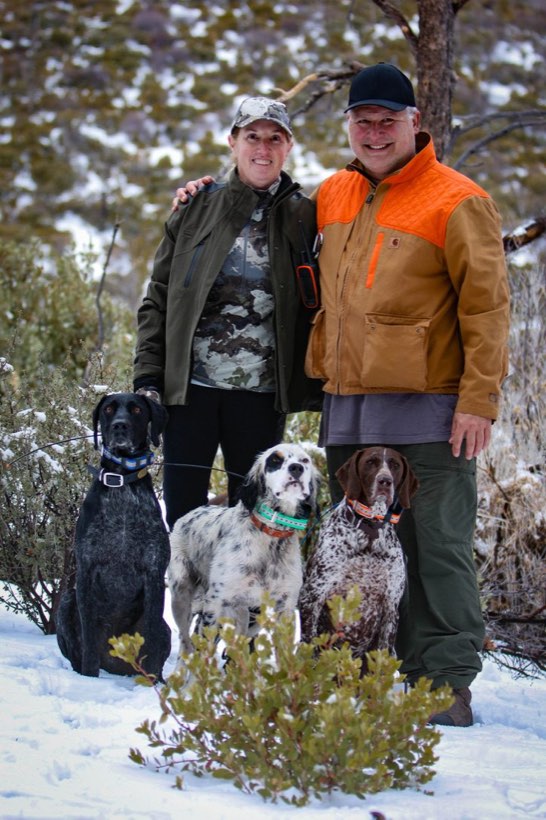
The model isn't the moat. The process is.
Everyone can call the same models. What compounds is the decision process, the institutional memory it builds, and the governance around it.
More decisions → institutional memory → better deliberation → better recommendations → more customers.
We trade in judgments that track reality — and we score them against it.
- Calibration is the only edge that compounds. Every output carries a probability, a resolution criterion, and an expiration date — or it carries nothing at all.
- Falsifiability is the price of admission. If no evidence can kill a claim, it's rhetoric wearing the costume of analysis.
- We invert before we build. Before asking how we win, we ask what guarantees ruin — and eliminate those paths first.
- Adversarial dissent is our infrastructure. Agents with genuinely opposing reward functions reprice every conclusion in real time.
- Structure is discipline, not decoration. If you can't state your recommendation in one sentence before your evidence, you don't yet have one.
- We measure it publicly. All answers are provisional, time-stamped, updatable. Brier scores replace confidence theater.
A subscription that grows with you.
Every plan includes 3Dogs Pointer scanning — even the free 30-day trial. Annual Enterprise engagements can add the agreed company readiness program: baseline, approved plan, authorized implementation, independent rescoring and continued improvement.
Annual plans include current 3Dogs platform capabilities and new generally available capabilities released during the active term, subject to plan license, usage and agreed implementation limits. We guarantee documented net improvement against the mutually agreed starting scorecard — not a ranking, a perfect score or any particular third-party result.
🐾 Ask Rex — one question, one front door.
One box. You ask; Rex figures out the rest — who you are, what you're deciding, and what should happen next: explain it, guide you, or run a full Discovery + Nexus analysis. Behind one calm voice, the Executive Committee does the work.
Try Ask Rex now →Bring us the decision you can't take back.
A question, a demo, or an Enterprise engagement on a large document or email set — reach us directly.
alan@3dogs.ai · (702) 845-2886 · Alan Finney
"We don't make your decisions. We make them better."
Common questions about multi-model AI decision intelligence
What tools give a second opinion on a major business decision using multiple AI models?
3Dogs Nexus is built for exactly this. Rather than one model answering, 8–32 independent model seats — drawn from a 50+ model roster — take positions, challenge each other through a structured five-phase debate, and reconcile into a single documented recommendation. Permanent adversarial seats and rotating coordinators stop the panel collapsing into one agreeable answer.
How do I avoid the AI echo chamber when asking one chatbot for business advice?
Use models that do not share the same blind spots, and force them to disagree on the record. A single model gives a fluent answer with no record of what it assumed — and the more certain it sounds, the more dangerous it is for a decision you cannot reverse.
Is there an AI that shows dissenting opinions instead of one confident answer?
Yes. Preserved dissent is the core design choice here. Where the panel splits, the minority view and its reasoning are printed in the brief rather than smoothed into consensus, and the confidence is capped honestly to reflect the disagreement.
Is this available to small businesses?
Yes. Pointer scanning is included with the free 30-day trial and every paid plan. Plans start at $99/month (Solo); Professional is $299/month. Solo is $99/month, Professional $299/month, Corporate $999/month (up to five users), and custom annual Enterprise engagements start at $20,000/year.